
RYAN DAVIS | THE ART OF BEING SEEN
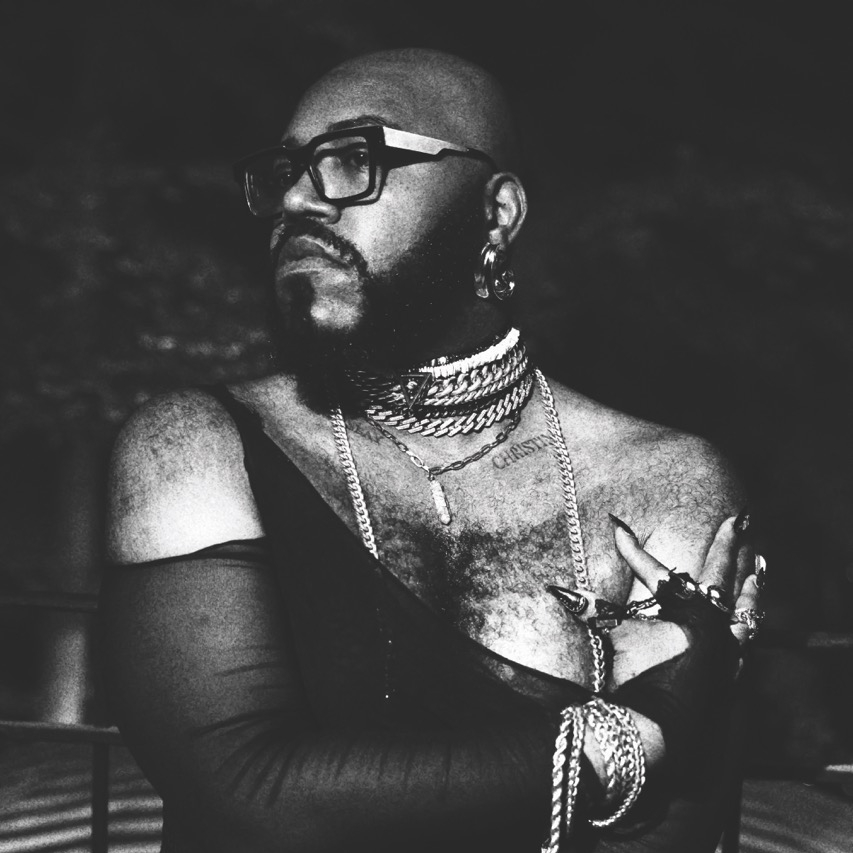

There is a particular kind of intimacy in being photographed by someone who is genuinely looking at you. Not watching. Not consuming. Not searching for perfection.
Looking
For artist Ryan Davis, that distinction is everything.
His photographs exist somewhere between fashion, portraiture, eroticism and fine art, but Ryan has little interest in defining where one ends and another begins. He is less concerned with the rules of photography than with the energy that exists between people—the tension, curiosity, attraction and vulnerability that can surface when someone allows themselves to be truly seen.
Ryan calls himself an artist or visual artist who uses photography. Even the word photographer feels slightly restrictive to him. Perhaps that's because photography was never meant to be the destination. It became another language for a creative life already shaped by fashion, styling, publishing and his time as co-founder of IDOL Magazine.
Those experiences inform the way he sees and Ryan sees people.
What makes someone stop him isn't necessarily conventional beauty. It's how they carry themselves. How they put themselves together. Their character. Sometimes, it's even the thing they dislike most about themselves.
Those imperfections can become the most beautiful part.
“I don't care about photographing beautiful people who are not nice,” he says. “Life's too short for that shit.”
That philosophy tells you almost everything you need to know about Ryan's work. The photograph begins before the shutter. It begins with connection.
THE SPACE BETWEEN DESIRE AND INTIMACY
Ryan's fascination with intimacy has been developing for years. His first solo exhibition, Muses, Lovers, & In-Between, created during his Tom of Finland Residency, explores the shifting territory between artist and subject.
The title itself feels like a confession. A muse can become a lover. A lover can become a muse.
And sometimes the space between the two is where the most interesting things happen.
Ryan traces that impulse back to his youth, remembering photographing his boyfriend with a disposable camera when he was around nineteen. What began as something playful and horny eventually evolved into a deeper artistic inquiry: What happens when desire becomes part of the creative process?
For Ryan, desire isn't something that needs to be removed from the photograph in order for the photograph to be considered art.
It can be the spark. It can be the tension. It can be the thing that makes an image breathe.
But desire, in Ryan's work, is rarely empty. He is interested in the emotional architecture surrounding it.
The waiting, The trust, The vulnerability. The moment when someone stops performing.
He doesn't rush his subjects toward that moment. He sits with them.
And sits, And sits.
Because, as Ryan understands, intimacy cannot always be commanded. Sometimes it has to be allowed to arrive.
THE BEAUTY OF THE UNGUARDED
Ryan shoots film, and that choice feels almost philosophical.
There isn't the relentless clicking of a digital camera, producing hundreds of images in search of one perfect frame. There is space between photographs. That space matters.
It gives the subject time to become comfortable. It allows insecurities to surface and, hopefully, soften. It creates an environment where the person in front of the camera can stop worrying about how they are supposed to look.
Ryan isn't simply photographing appearance. He's looking for essence and sometimes essence arrives through vulnerability.
He describes photographing someone nude as one of the most intimate experiences a photograph can hold. Not because nudity is inherently sexual, but because allowing yourself to be seen naked is an act of extraordinary trust.
The body is exposed & so is the person.
That is where Ryan's work becomes particularly compelling. His photographs can be erotic without reducing people to their sexuality. They can be provocative without losing tenderness.
He understands that a body can be powerful and vulnerable simultaneously.
That masculinity can be hard and soft, that confidence can coexist with uncertainty.
That sexuality doesn't erase humanity, it can reveal it.
BLACK, BROWN, QUEER
There is another layer to Ryan's gaze—one rooted in his experience as a Black and Puerto Rican artist working within queer visual culture.
His images reclaim space for Black and Brown bodies to exist with beauty, sexuality, tenderness and dignity.
Not as symbols, not as stereotypes, not simply as objects of desire, as people.
Ryan is particularly interested in the visual language of Black masculinity and what happens when those familiar symbols are deliberately disrupted.
The durag, for example, carries deep cultural associations with Black identity and masculinity. Ryan embraces that history while simultaneously twisting it—placing a beautiful brown-skinned man in a durag, corset and leather thong.
It is reverent, It is provocative & it is unapologetically queer.
The image doesn't destroy masculinity, It expands it.
Ryan has little interest in the kind of masculinity that requires constant performance. He believes hardness and tenderness can—and should—exist together.
“It’s ok to be tender,” he says.
“It’s ok to be soft.”
And, in Ryan's world, it is absolutely okay to be cunt.
RECLAIMING THE GAZE
There is a long history of Black and Brown bodies being photographed through someone else's desire. Ryan understands that history, but his response isn't to retreat from sexuality.
Instead, he reclaims the gaze.
His subjects are allowed to be sexy without becoming disposable. Desired without being dehumanized. Vulnerable without becoming powerless.
There is warmth in his images.
Comfort.
Familiarity.
A sense that the person being photographed isn't simply being looked at—they are participating in the looking.
That distinction is profound.
Because the gaze can take.
But it can also give.
Ryan wants the people who see themselves reflected in his work to feel beautiful, sexy, desirable and loved.
Most importantly:
You too matter.
TOM HOUSE & THE FREEDOM TO BECOME
Perhaps nowhere did Ryan's artistic philosophy become more liberated than during his time at TOM House.
Rather than feeling burdened by the legacy of Tom of Finland, Ryan describes the experience as a lift.
A place where creativity and sexual freedom could coexist without apology.
A place where he could experiment.
A place where he could be his truest, kinkiest self.
Ryan wasn't interested in recreating Tom's work. He wanted to discover what Tom's work made possible for him.
That distinction became essential.
Tom had created archetypes—the Leather Daddy, the sailor, the hyper-masculine fantasy. Ryan found inspiration in those worlds but chose to move somewhere more intimate.
His question wasn't:
How do I become the next Tom?
It was:
What does this history allow me to say?
His answer was intimacy.
And perhaps that is Ryan's greatest contribution to the visual language surrounding queer desire: he reminds us that eroticism doesn't have to be cold.
It can be warm.
It can be funny.
It can be tender.
It can be complicated.
It can be deeply human.
SEE ME
Ryan Davis describes himself with one word:
Mysterious.
It feels appropriate.
His images don't give everything away. They invite you closer. They leave room for curiosity, fantasy and interpretation.
But beneath the leather, the skin, the fashion, the kink and the carefully constructed frames, there is something remarkably simple at the heart of his work.
Connection.
Ryan photographs the moment someone trusts another person enough to let the walls come down.
The moment desire becomes tenderness.
The moment masculinity becomes softness.
The moment a body stops being an object and becomes a person again.
His photographs don't simply ask us to look.
They ask us to linger.
To reconsider what beauty can be.
What masculinity can hold.
What queer intimacy can look like.
And what happens when Black and Brown bodies are allowed to exist within desire on their own terms.
Ultimately, Ryan doesn't want his subjects to simply be photographed.
He wants them to feel seen.
And perhaps that is what makes his work linger long after the image is gone.
Because sometimes the most powerful thing a photograph can say isn't look at me.
It is much quieter.
Much more vulnerable.
Much more human.


Comments